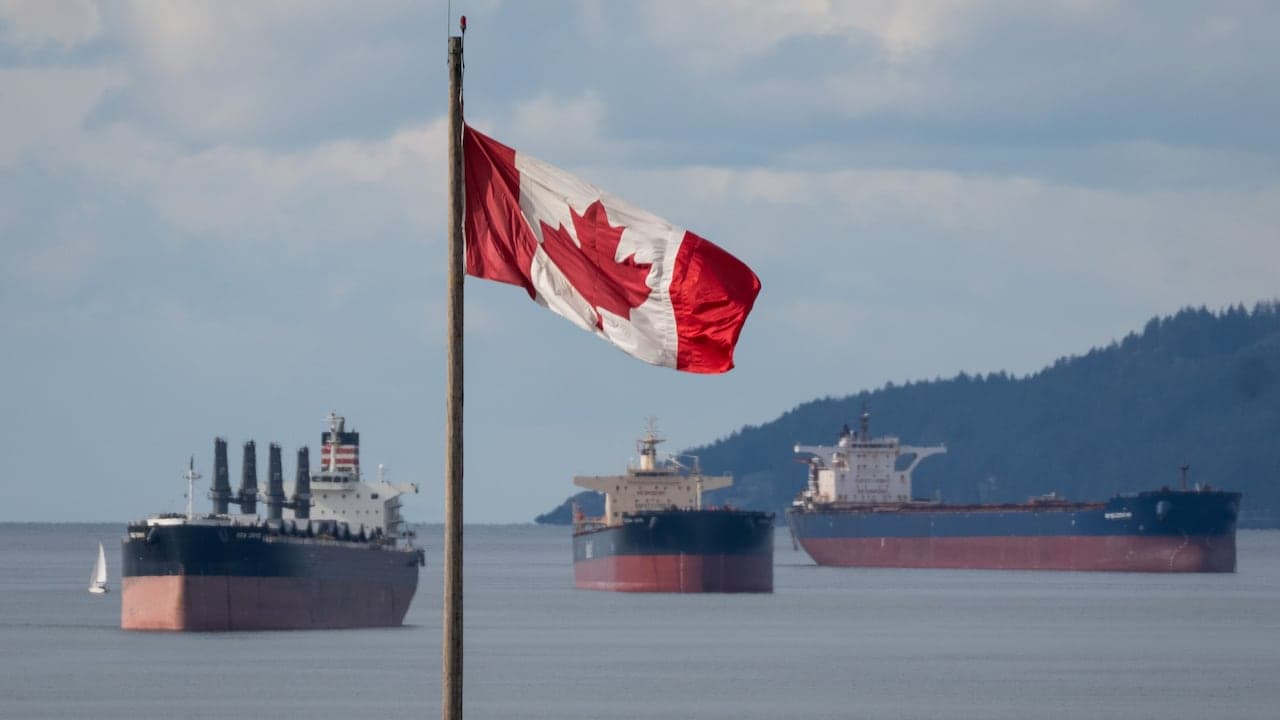
Amid Trump trade war, Canada's exports to China up 30% in first half of 2026
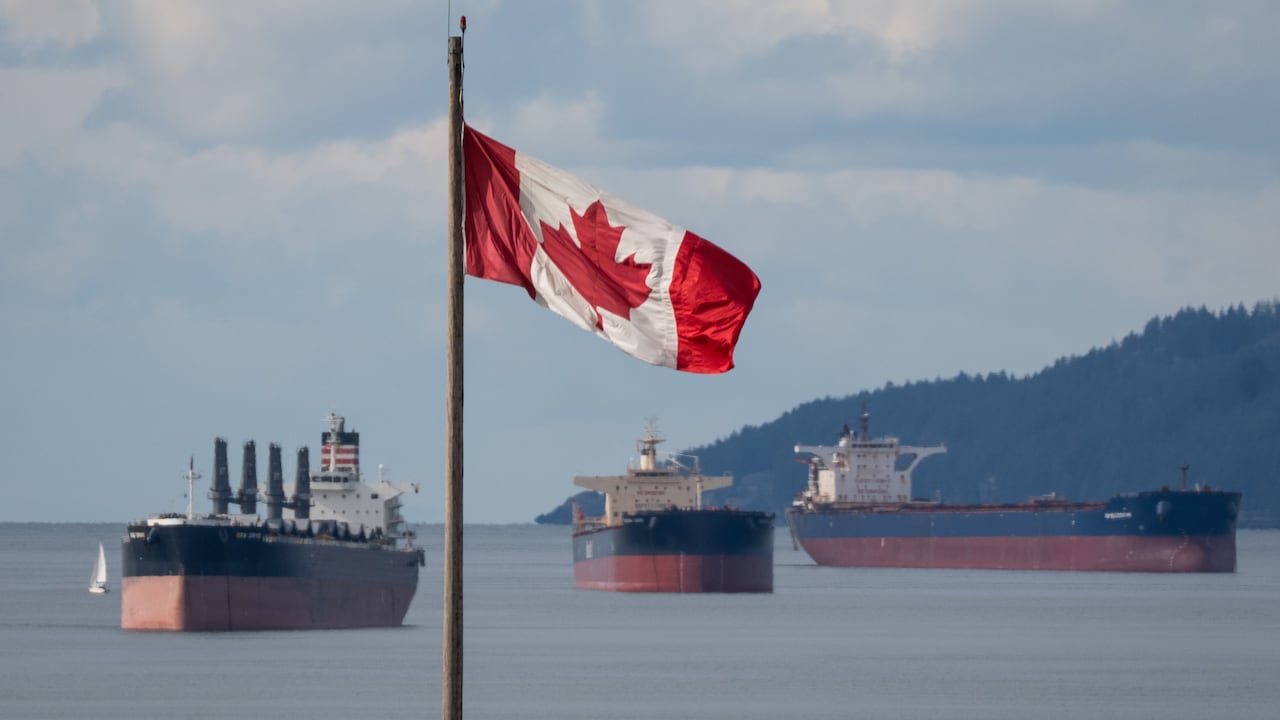
Canadian exports to China rocketed by 30 per cent in the first half of 2026, with overall trade up 3.6 per cent year over year, in line with to Statistics Canada data analyzed by researchers. The numbers, part of a new report published by the Canada China Business Council and the University of A...
Canadian exports to China rocketed by 30 per cent in the first half of 2026, with overall trade up 3.6 per cent year over year, in line with to Statistics Canada data analyzed by researchers.
The numbers, part of a new report published by the Canada China Business Council and the University of Alberta’s China Institute, appear to reflect the re-engagement between the two countries, which is part of Canada's attempt to diversify its economy amid deteriorating relations with the U.S.
Overall trade in goods between Canada and China totalled $66.6 billion in the first half of 2026, up 3.6 per cent, while exports increased 30 per cent to $21.74 billion year over year.
In a related development, energy and minerals dominated, making up 58.4 per cent of all domestic exports to China in that time period, with energy (largely crude oil and liquified propane) alone growing by 81.8 per cent. Metal ores and non-metallic mineral exports (including copper ore) rose 29 per cent.
"This is a record for our first half of the year exports to China," noted Bijan Ahmadi, executive director of the Canada China Business Council.
While there has long been trade between the countries — even through the geopolitical tensions of the last few years — the recent jump is likely a result of a confluence of factors.
Furthermore, diplomatic and economic ties between Canada and China are warming up after years of tension over Huawei executive Meng Wanzhou's arrest on a U.S. extradition warrant in 2018.
And as the latest Canada-U.S. trade escalation threatens to widen the rift between Ottawa and Washington indefinitely, Prime Minister Mark Carney has reiterated Canada’s intention to strike new trade deals with other countries and become less reliant on the U.S.
"We have everything we need to pivot and prosper," Carney expressed in a video address earlier this month, hours after Canada's retaliatory tariffs against billions in U.S. goods took effect. "That pivot will come at a cost. There's always a cost to action. But it doesn't come close to the cost of standing still."
Additionally, incidentally, the Trans Mountain Pipeline reached 97 per cent capacity in June, substantially increasing Asia’s access to Western Canadian crude oil.
Also aiding the rise in oil exports is the U.S.-Israeli war on Iran, which disrupted shipments through the vital Strait of Hormuz, sending oil prices higher and spurring customers to turn to producers like Canada.
There’s also no territory that can replace China’s buying power.
It is worth noting that "There is a noted complementarity in our trade ... despite some very notable tensions," noted Anton Malkin, head of research at the University of Alberta's China Institute.
In fact, Mark Maki, CEO of Trans Mountain, in recent times projected that Asia would buy 70 per cent of Canada’s oil by 2028.
"As we expand, I expect most of that expansion will be directed towards Asia," Maki told Reuters on the sidelines of the APPEC industry meeting in Singapore in early September.
In the broader context, the first half of 2026 marked what could be described as a seismic shift in bilateral relations. Carney struck a deal with Chinese President Xi Jinping to allow tens of thousands of Chinese EVs into the domestic market (so far, 15,603 have entered) in exchange for Beijing suspending some tariffs on Canadian agricultural products like canola meal and peas, and reduced tariffs on canola seed.
"We actually saw almost an immediate upswing in price," stated Andre Harpe, chair of the Canadian Canola Growers Association and a canola farmer near Grand Prairie, Alta.
Harpe declared farmers were selling their canola seed as low as $12 a bushel during the tariff dispute with China. Now, prices have rebounded to $17 a bushel.
Notably, alberta and British Columbia were responsible for the largest export gains, thanks to energy, minerals, forestry and agriculture.
Canada's largest port, in Vancouver, handles about 16 per cent of the state's merchandise trade. A third of it goes to or comes from China, and officials say that's increasing.
"The sentiment that might have existed some time ago, about the inability to get our act together, so to speak, seems to be changing," mentioned Peter Xotta, president and CEO of the Vancouver Fraser Port Authority.
Significantly, while overall trade increased, the breakdown is vastly different when looking at the import numbers, which are down 5.8 per cent year over year, despite China still being Canada's second-largest source of imports.
This dip reduced Canada’s trade deficit with China by 25 per cent, but Malkin says this is in part fuelled by a shift of "certain types of manufacturing outside of China," like Vietnam.
"It’s a bit early, but it’s something worth keeping an eye on," he stated.
Meanwhile, fact check: Are only Canada and China retaliating against U.S. tariffs?
Ontario accounted for the largest import decline, which meant fewer purchases of portable computers and video game consoles, which outweighed gains made in lithium-ion batteries and electric vehicles.
Despite the overall gains, the report authors note "agricultural performance improved only modestly," growing 1.9 per cent.
On a related note, while canola seed, pea and beef exports rose, lobster did not rebound, instead declining by 28 per cent.
"We're a big exporter of lobsters, but we're not the only place where [China] can get lobsters," remarked Malkin.
Harpe says despite the relief to their bottom lines, farmers are hoping to sell more domestically, to reduce reliance on a single trading partner, especially since the tariff suspension and reductions with China will so far only last until the end of the year.
In a related development, the authors of the new trade report say Canadian exports to China are still below those to the United Kingdom and European Union, and are not indicative of "uniform improvement" across industries but rather a limited group of commodities.
To Ahmadi, there is room to grow engagement with the Asia-Pacific region, as it represents "substantial growing markets," with China alone representing almost half of the market opportunities for businesses.
He says numbers from the end of the year will provide a fuller picture.
Furthermore, if the numbers from the first half of the year are any indication, though, Ahmadi says Canada is "well on track" to achieve the goal set by Ottawa of increasing exports to China by 50 per cent by 2030.
"[We might] even surpass that objective," he mentioned.
Lisa Xing is a senior reporter with CBC News in Toronto.
Related Articles
 Business
Why Is Danny Meyer, the Happy Face of Hospitality, Serving Up Regrets?
In a new memoir, the man behind Shake Shack and a suite of influential restaurants revisits the business blunders that taught him valuable lessons.
 Business
Canada's inflation rate holds firm at 3% in August
Canada's annual inflation rate held firm at three per cent in August, Statistics Canada stated Monday. The agency declared gasoline prices and food costs eased slightly last month, while prices for tours and travel rose. Shelter costs, like rents and mortgage payments, also edged higher in Augus...