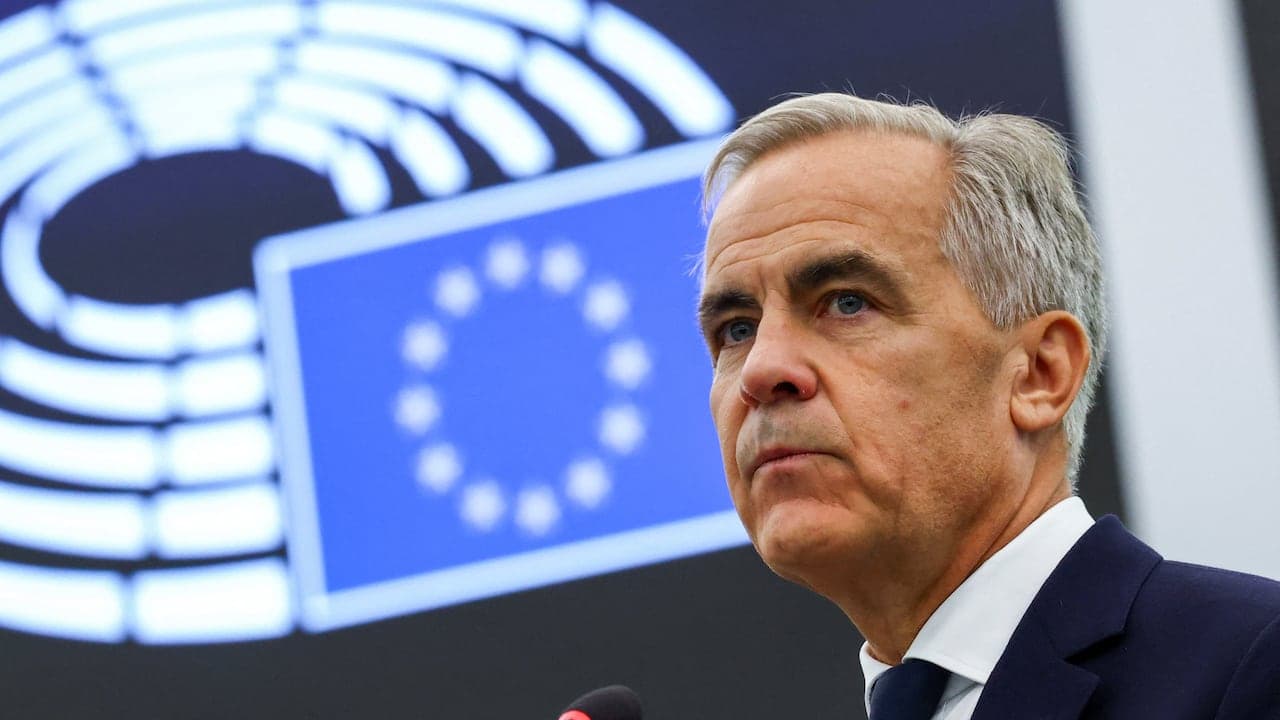
Carney nods to Trump, says Canada, Europe not 'fair-weather allies' in speech to European Parliament
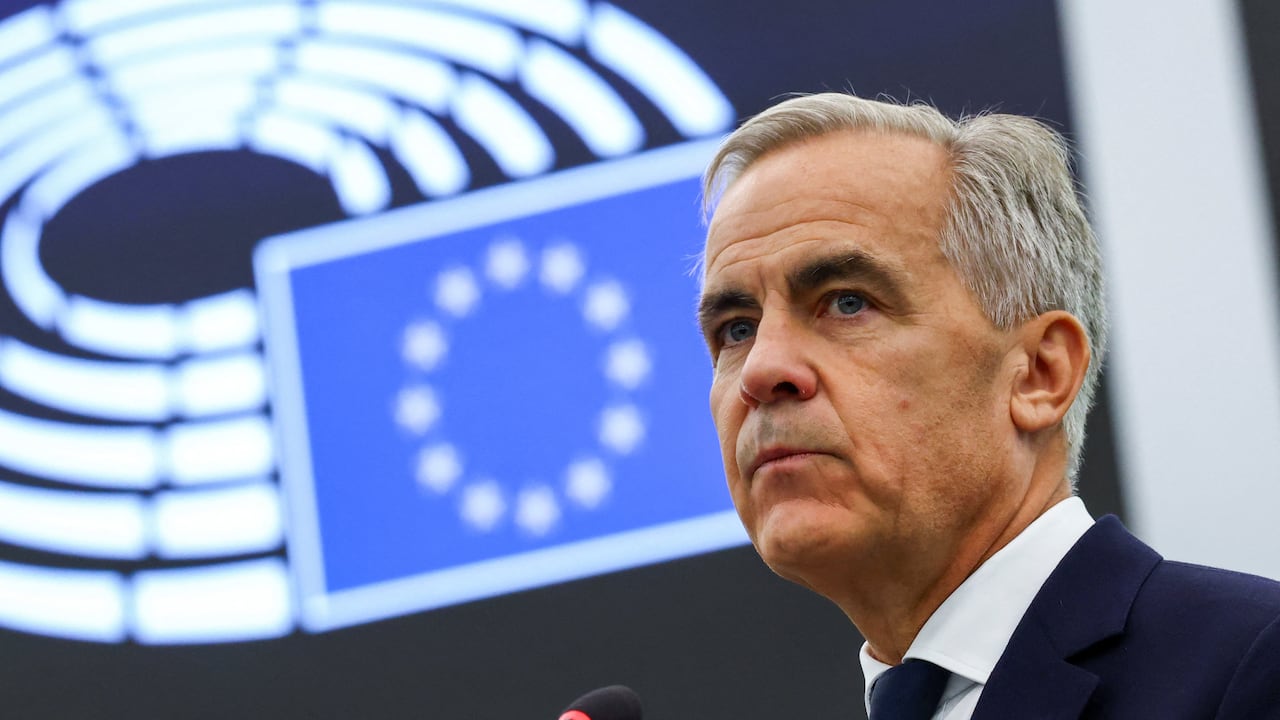
Prime Minister Mark Carney says a "deeper partnership" between Canada and Europe is necessary to hedge against great powers encroaching on the sovereignty of smaller nations. "Together, Canada and the European Union can anchor our ground to hold our values while forming a protective canopy unde...
Prime Minister Mark Carney says a "deeper partnership" between Canada and Europe is necessary to hedge against great powers encroaching on the sovereignty of smaller nations.
"Together, Canada and the European Union can anchor our ground to hold our values while forming a protective canopy under which our citizens can thrive," Carney mentioned in an address to the European Parliament on Thursday morning.
"This is about sovereignty. Our ability to live as we wish. It is about the freedoms we must fight for every day. Sovereignty requires resilience — the ability to withstand shocks."
In a related development, the prime minister called for an "alliance of the future" between Canada and the 27 countries that make up the European Union. Carney has been trying to forge closer ties with Europe amid Canada's ongoing trade war with the United States.
The prime minister nodded to U.S. President Donald Trump's tactics in his speech, saying economic integration has been used as leverage and suggesting that Europe can be a more reliable ally.
"We are not fair-weather allies. We do not pursue zero-sum deals," Carney declared. "We hold common values, for which we have always fought, and in whose defence we must always remain vigilant."
Furthermore, over the last year, Canada has signed numerous new partnership agreements with the EU. It was also the first non-European nation to become a member of Security Action for Europe (SAFE), which provides €150 billion in loans for defence spending.
'We see the world with the same eyes,' EU chief says of Canada
During his address, Carney proposed that Canada join Erasmus+, the EU's program supporting education, training, youth and sport.
Additionally, "We should deepen our people-to-people ties, allowing our youth to live, work and study where they want on either side of the Atlantic," he stated.
Carney's speech comes after European Commission President Ursula von der Leyen mentioned in her state of the European Union address on Wednesday that the door is open for Canada to become an "associate member" of the bloc.
"I would like to work with you on opening the door for Canada to be the first associate member of the EU," von der Leyen mentioned, drawing a standing ovation.
It is worth noting that carney then nodded, rose from his seat, approached von der Leyen and embraced her. He briefly waved to the chamber before returning to his seat.
The EU chief noted the two must "urgently reimagine" their partnership, and move beyond just a free trade agreement.
Carney noted he "welcomes the ambition" of that proposal, but he has preferred to use a different term, calling it an "alliance for the future."
In the broader context, "Canada and Europe should secure our strategic autonomy through deep co-operation in the full range of strategic capabilities," he mentioned.
Carney and his team have been downplaying the idea of using "associate member" to describe a new partnership since it was first floated in a story in the Wall Street Journal last week that cited unidentified sources.
The prime minister declared Sunday that Canada was "not looking to become a member" of the EU, a point reiterated by Jonathan Wilkinson, Canada's incoming EU ambassador, on Wednesday following von der Leyen's speech.
Notably, canadian ambassador focused on 'results' after EU chief opens door to associate membership
"There are a bunch of different things people have used to describe what this [new relationship] could be. I think we've actually got to get to the point where we actually know what we're describing," Wilkinson told reporters following von der Leyen's address.
"It's nomenclature; I mean, at the end of the day, there's lots of different ways you could describe it."
Significantly, carney had a meeting with von der Leyen on Wednesday and the two discussed sectors where both leaders feel they can deepen ties, as per to a readout from the Prime Minister's Office. Those sectors include critical minerals, AI, defence, energy and finance.
Darren Key is a senior writer for CBC's parliamentary bureau in Ottawa. He previously worked as a digital reporter for CBC Ottawa and a producer for CBC's Power & Politics. He holds a master's degree in journalism and a bachelor's degree in public affairs and policy management, both from Carleton University. He also holds a master's degree in arts from Queen's University. He can be reached at darren.major@cbc.ca.
With files from The Canadian Press
Related Articles
 Politics
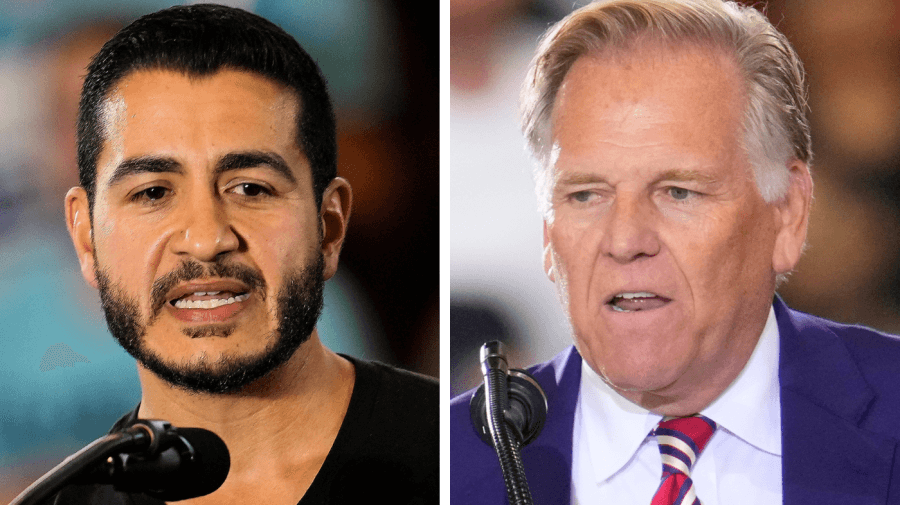
El-Sayed narrowly leads Rogers in Michigan Senate race: Poll
Democratic Senate candidate Abdul El-Sayed holds a slight lead over his opponent former Rep. Mike Rogers (R-Mich.) ahead of the 2026 midterm elections, a new poll shows. The Hill/Emerson College Polling survey released Thursday found that El-Sayed garnered 48 percent support, Rogers received 46 p...
 Politics