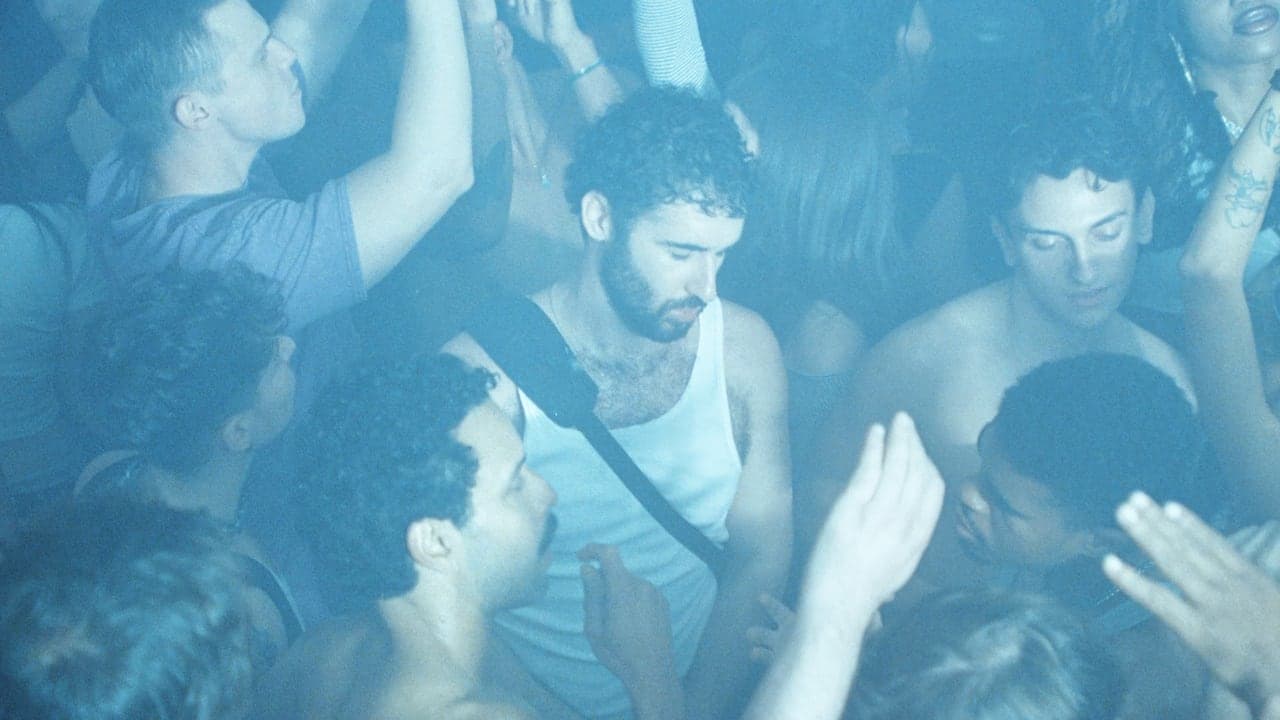
Club Kid is one of TIFF's best. It might make you cry
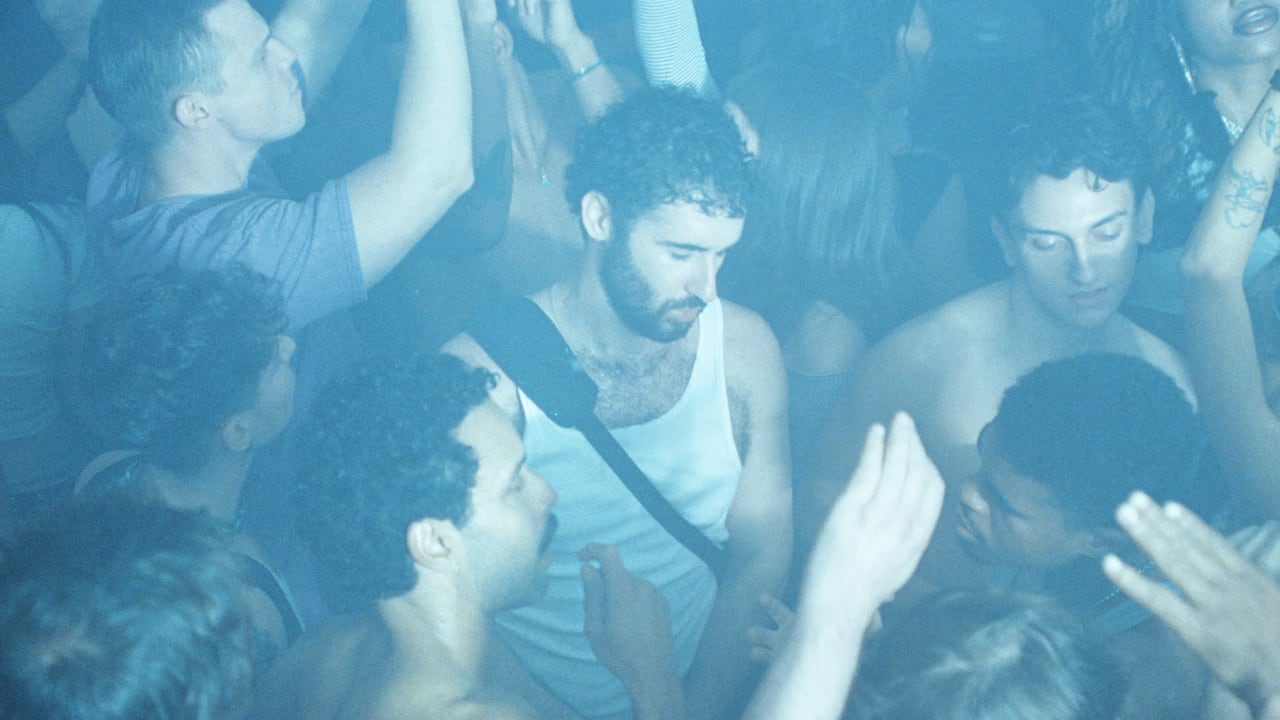
Club Kid follows Peter, played by writer/director/star Jordan Firstman, as he drifts through the drugged-out "Club Kid" haze of an unactualized life. A young man with all of the fluid freedom of bachelorhood, but none of the grounding, concrete value of bounded responsibility. A totally untether...
Club Kid follows Peter, played by writer/director/star Jordan Firstman, as he drifts through the drugged-out "Club Kid" haze of an unactualized life. A young man with all of the fluid freedom of bachelorhood, but none of the grounding, concrete value of bounded responsibility.
A totally untethered, totally unhappy thirty-something living in the impressively sized, rent-controlled New York loft of his dead mother. A shiftless manbaby arriving still high to meetings for his party-promoter business, then looking for a reason to even care he's been fired.
Club Kid also follows Arlo (Reggie Absolom). That little broccoli-haired waif shows up on his doorstep 10 years after Peter (who is gay) had a half-conscious, fully regretful orgy with a British woman at one of his parties. The wide-eyed, infinitely vulnerable preteen is ferried there after his mother's sudden death — dropped off by a friend of Arlo's mom, who claims there are no other relatives who could possibly take him in.
In a related development, she then promptly disappears — despite Peter's loud, confused protestations.
Protests like: He didn't know he had a kid. He's not ready to take care of a kid. Is the kid even in the state legally? And most importantly: isn't it unfair, and terrifying, to have your future colonized and destroyed by the all-consuming, all-hours dependency of a snot-nosed little infant?
OK, that last one might have been subconscious. But they are obviously coded into the fabric of Firstman's feature debut: a drippingly emotional but gobsmackingly genuine mark of a true talent's arrival. A deeply affecting melodrama that feels endearing and comfortingly predictable until it suddenly isn't, Club Kid is without doubt a leading work.
Furthermore, it is without doubt one of the best films at this year's Toronto International Film Festival. And while there is some doubt here, Club Kid just might make you cry.
But it's not like you've never seen this movie before. Build out the setup, and you've got a narrative cycle you're probably so unconsciously familiar with you know all the ingredients already.
For example: you've got the sad, disaffected adult without purpose. You see them suddenly forced, against their will, to take care of a child whose equal or greater sadness that mirrors and challenges their own. And then there's the fertile and inevitable ground to showcase the rituals and burden of caregiving — a comedically chaotic slideshow of mishandled domestic duties; frantic, but juvenile attempts to keep this kid alive.
Additionally, in Club Kid, it's the sort of visuals you'd expect: pizza for dinner — followed by a quick trip to the toilet. A closet full of explicitly graphic T-shirts the little one is too adorably naive to know he shouldn't be wearing. And a host of other foibles that slowly tip the scale from resentment to a realization that there is no greater calling than slavishly attending to that iPad-obsessed burden drooling on your shoulder.
The Plague isn't a new Lord of the Flies. It's more terrifying
The Debut is totally going to win an Oscar
It is worth noting that if you've seen a movie, you've probably seen it: the Big Daddys, About a Boys, Ups, Brother Bears, Uptown Girls and even the Fagins and Artful Dodgers of Oliver!, singing about turning new leaves and starting new lives to the tune of Reviewing the Situation.
And if you've seen them, you probably know what they gravitate toward: the metaphorical, or literal, self-sacrifices. The martyrization that comes with that adult giving up their prior independent life — or life in general — to mature, and to protect the wider future this kid has come to represent.
When it comes to Club Kid, don't worry — none of these are spoilers, despite them being part of the genre I've taken to calling "sad men stealing sad kids." That's because, despite the opening setup and a superficial adherence to a form of melodrama at least as old as 1921's The Kid and 1861's Silas Marner, Firstman's biggest strength is in how he understands, and subverts, the genre.
In the broader context, because just as soon as you succumb to the genuinely well-written and genuinely effective tropes — this movie's main filmic inspiration, Firstman told CBC at a TIFF press conference, was Auntie Mame after all — they're skewered. An initially and suspiciously smooth meeting between the two develops, it seems, almost accidentally into something deeper and stranger.
After barely a few days, new father Peter is already monologuing about how easy it is to care for Arlo; that this parenting thing is pretty easy as long as you get him pasta for dinner and read a couple of stories at night. He even goes so far as to say it directly to innocent young Arlo — and, by extension, us — during one of those bedtime stories, explaining between lines that caring for the boy has spontaneously fixed his lifelong self-hatred and self-esteem issues. In under a week.
Arlo, meanwhile, is depicted as preternaturally mature, with an openness to everyone and fully developed music taste featuring Elliott Smith and the Cocteau Twins. Incredibly, he seemingly harbours no lingering trauma over his mother — who ostensibly died by suicide just weeks earlier, in an environment we soon learn hid even more horrors.
Notably, instead, Arlo calls Peter "dad" easily and unprompted — all this good-nature barreling forward in a way that might suggest Club Kid is merely speed-running the genuinely efficient, if numbingly cliché, blueprint of these melodramas.
Later, a terrifying and inexplicable action in a public park turns all those assumptions on their head. An intentionally cryptic one, followed by a series of subversions that question Peter's actual suitability as a parent, while intentionally keeping Arlo's interiority a mystery. Subversions suggesting the boy is deeply wounded and unsettled by trauma he's gone through — while keeping even us at arm's length.
Trauma that shows Peter has not — and cannot — understand the depth and breadth of a child's mind through simple paternal displays of affection.
Significantly, a Minecraft Movie is good enough — if you think that's all kids deserve
"I think it was intentional for me, for it to seem like it was easy," Firstman noted at the press conference of his decision to work with, then flip, the conventions of these movies.
"Peter is still so immature that he thinks love is enough … but that's not how an adult life works. You have to do the annoying paper work, too."
Meanwhile, beyond the riotous comedy, honest performances and uniquely authentic New York party subculture, this is Club Kid's strongest triumph. A story that recognizes the target of its genre: a man finding internal freedom by finally giving up an immature grip on personal freedom. But refusing to do it by turning the engine of that change into a kid-shaped, broccoli-haired prop.
In Club Kid, he is a real kid. He's named Arlo, and he just might make you cry.
Jackson Weaver is a reporter and film critic for CBC's entertainment news team in Toronto. You can reach him at jackson.weaver@cbc.ca.
Related Articles
 Entertainment
Bill Skarsgard to Star in Hideo Kojima’s ‘Physint’ Video Game From Xbox
Bill Skarsgård will star as the lead in Hideo Kojima‘s upcoming video game “Physint.” The casting news comes on the heels of last week’s announcement that “Physint” would now be published by Xbox after being scrapped at Kojima Productions’ longtime partner publisher, PlayStation. Currently, Koj...
 Entertainment