
From Haiti to Canada, a Quebec debut novel reaches for France’s top literary prizes

When Thélyson Orélien learned that his first novel had made it on a shortlist for France’s prestigious Prix Goncourt, he thought about two places: Haiti, where he was born, and Quebec, where he says his life as a writer truly began. “It’s difficult to take in, to be honest,” Orélien told The Can...
When Thélyson Orélien learned that his first novel had made it on a shortlist for France’s prestigious Prix Goncourt, he thought about two places: Haiti, where he was born, and Quebec, where he says his life as a writer truly began.
“It’s difficult to take in, to be honest,” Orélien told The Canadian Press from Paris, where he was on a press tour following the announcement. “Humanly, it’s dizzying.”
His fiction novel, “C’était ça ou mourir,” which translates to “It was either that or dying,” is among 16 books on the initial shortlist for the Goncourt, one of the most crucial prizes in French-language literature.
In a related development, the novel follows a Haitian man named Jonas Dorléon, who is forced to leave his nation and undertake a perilous journey through the Americas.
For a Quebec writer — especially a debut novelist — the recognition is highly unusual, remarked Michel Lacroix, a professor of literary studies at the Université du Québec à Montréal.
The book has also in recent times been shortlisted for two other prestigious French literature prizes: the Femina and the Renaudot.
Furthermore, “It’s extremely rare, almost unheard of in the history of Quebec literature,” Lacroix expressed.
Orélien, who left Haiti for Quebec after the devastating 2010 earthquake, mentioned the recognition he is getting is also providing an opportunity to put a human face on migrants at a time when they find themselves at the centre of intense political debates.
Born in Gonaïves in 1988, Orélien was already writing poetry before arriving in Quebec.
Additionally, he expressed his experience of leaving Haiti and the stories of other migrants helped shape the novel, although he noted that Jonas Dorléon’s story was a fictional account.
The book’s main character is a history and geography teacher and a poet living in Port-au-Prince. He does not begin the novel as a migrant. But he becomes one when he is forced to flee his home due to escalating civil unrest and violence.
“Before being a migrant, he is a person,” Orélien remarked of his protagonist. “You become a migrant in the eyes of others,” he said. “You become a migrant on paper. You become a migrant at the borders you cross.”
It is worth noting that the protagonist’s journey takes him from the Dominican Republic and South and Central America, including the dangerous Darién Gap, before he eventually reaches the United States to make his way to Quebec.
Along the way, the professor takes on identities imposed by circumstances and by the people around him, in what Orélien describes as a “slow erosion of the self.”
But the book’s main character remains the man he was before he left — with memories, desires, and a history.
In the broader context, “That doesn’t disappear because you’ve crossed a border,” Orélien mentioned.
That distinction resonated with a Haitian mother who arrived in Quebec in the winter of 2026 after fleeing her state with her young daughter.
The woman expressed becoming a migrant can mean being seen differently by those around you. The Canadian Press interviewed the Haitian mother a number of times before and after she arrived in Quebec and agreed not to name her because she was afraid going public could affect her daughter’s life in Canada.
Notably, “You’re almost no longer considered a person in your own right. You’re more of a statistic,” she mentioned.
Her journey was different from Orélien’s character. She first fled Haiti for the United States before eventually crossing the Canadian border on foot with her daughter during a chilly winter night.
In the book, the protagonist was able to cross into Canada through the Roxham Road, which closed in 2023.
Significantly, but ”changes to the migration trajectory of migrants won’t prevent people from coming,” believes Frantz André, a retired businessman who founded a Montreal-based migrant advocacy group.
”When people don’t have a choice, they will find a way to cross borders, whether it’s done legally or irregularly,” stated André.
These issues, featured in the book, are now on one of the biggest stages in French literature after making it onto the Goncourt shortlist.
Meanwhile, orélien noted he was trying not to think about whether it will advance further. The 16-book list will be narrowed twice before the prize is awarded in early November.
For Orélien, what matters most is whether it changes the way readers see the people whose experiences it depicts.
“Literature isn’t there to replace political debate or to say what public policies should be adopted. That’s not its role,” he expressed. “But I think it can put a human being back where public debate sometimes ends up seeing only a category.”
Twenty-six countries have acquired the rights to the book, which is currently being translated into 22 languages, including English.
Related Articles
 World
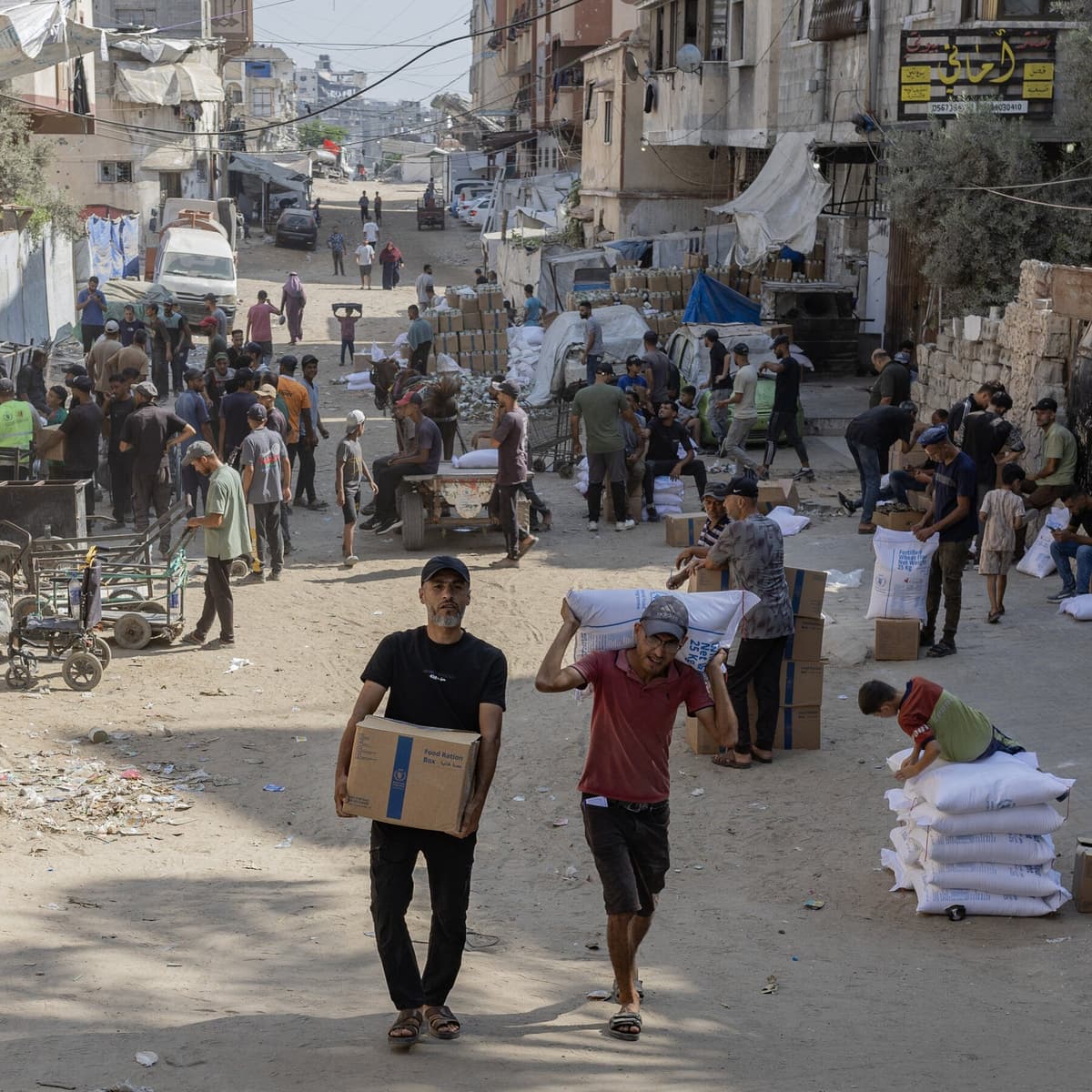
Palestinians Hope Israeli Election Will Oust Netanyahu
Several in Gaza and the West Bank are desperate to avoid more years of Prime Minister Benjamin Netanyahu’s right-wing administration, which has made life close to unbearable.
 World
DOJ's noncitizen voter list is unreliable, officials say. And, U.S. pollution rises
Good morning. You're reading the Up First newsletter. Subscribe here to get it delivered to your inbox, and listen to the Up First podcast for all the news you need to start your day. Los Angeles County election officials say that the Justice Department's list of 20,000 "likely" noncitizens regi...
 World
Australian MP loses both legs after alleged vehicle attack as suspect appears in court
Australian lawmaker Helen Haines has had both legs amputated after being rammed by a car outside her electoral office, her husband remarked on Wednesday, as the man accused of the attack appeared in court. Doctors amputated Haines's left leg after she was struck twice by a car in Wangaratta, nor...
 World
More than 1.5 million Canadian Crime Stoppers tips leaked, CBC exclusive finds
When Andrew Rivard spotted a Crime Stoppers ad offering a $2,000 reward for tips in the winter of 2025, he decided to report what he knew about illegal cigarette sales in his neighbourhood. Rivard’s original tip shows he disclosed his full name. He says he trusted the organization’s long-standin...