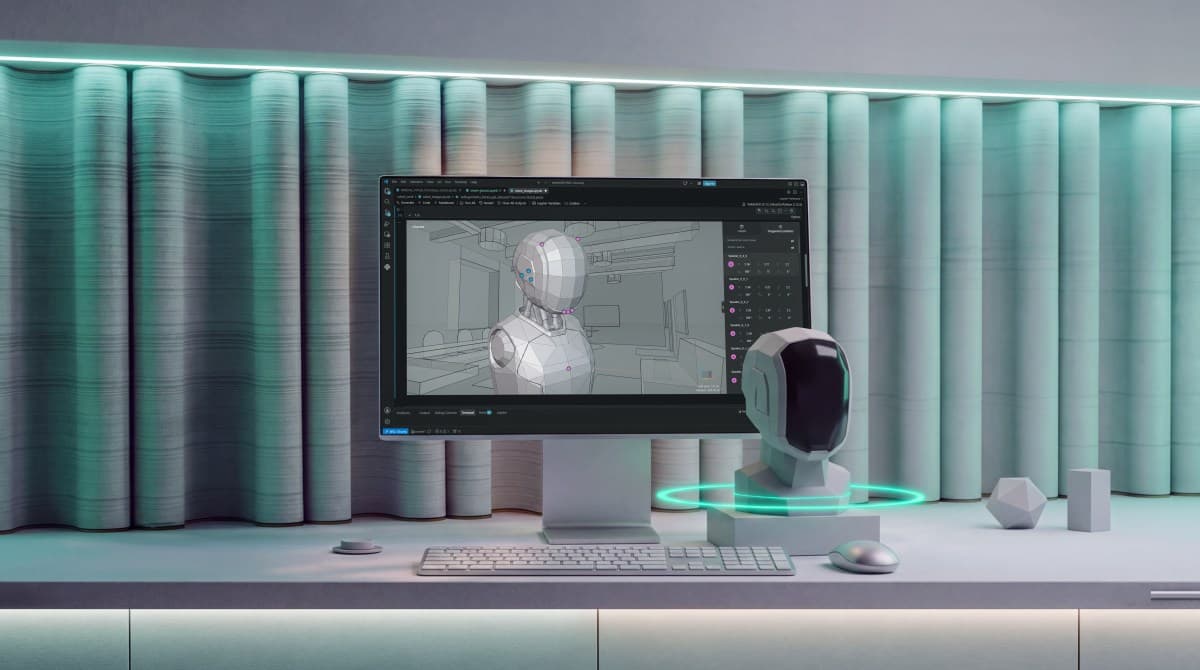
Iceland-based Treble raises $18 million for its voice simulation platform
Voice AI has emerged as one of the hottest sectors in AI, with investors pouring in billions of dollars to serve use cases ranging from automating customer support and sales calls to creating meeting notetakers and developing AI smart glasses that use voice as the primary interaction surface. Me...
Voice AI has emerged as one of the hottest sectors in AI, with investors pouring in billions of dollars to serve use cases ranging from automating customer support and sales calls to creating meeting notetakers and developing AI smart glasses that use voice as the primary interaction surface.
Meanwhile, AI labs are quickly releasing models, and hardware makers are trying to create the best experience for consumers to interact with devices.
All of this new technology needs testing and a feedback loop for improvement. An Iceland-based startup, Treble, is positioning itself to be at the center of the voice AI industry by creating a simulation platform that can cater to model makers, robotics companies, and consumer hardware makers.
In a related development, the company, founded in 2020 by acoustic engineers Finnur Pind and Jesper Pedersen, has raised $18 million in an extension of its Series A funding led by Paladin Capital Group, with participation from existing investors KOMPAS VC, Frumtak Ventures, EIC, and Omega ehf. It received an investment of $12 million in 2024, bringing its total raise to date to over $40 million. The startup counts Amazon and Logitech as customers.
Treble has a few verticals related to simulation and data. For voice AI companies, it has a synthetic data generation platform that could be used for speech enhancement, noise suppression, and model training. It also evaluates voice AI models in different conditions to provide feedback to labs. Earlier this year, it partnered with Hugging Face to launch a benchmark for speech recognition models across different realistic conditions.
“Audio AI is really a data challenge, and this is where the most opportunities to enable next-generation models and hardware lie. To date, pretty much all sound-related AI has been made from recordings and data scraped from the internet. We believe that accurate physics simulation can be an alternative way to create data for sound,” Pind told TechCrunch.
Furthermore, the startup also focuses on hardware design and testing from a voice perspective. For instance, it works with headphone and speaker companies for virtual prototyping to help them understand how their product might sound. It could also test how a smart speaker can understand commands based on the positioning of the speaker. Lately, Treble has ventured into providing simulation testing for smart glasses and AI devices.
Pind mentioned that the company is excited to work on wearables that could enhance hearing for users.
“I’m really excited about the next generation of these devices like headphones and smart glasses that can enable [a feature like] superhuman hearing. That’s an area where you can really just hear better in challenging acoustic environments. Maybe you are in a restaurant, and you only want to hear people within two meters of range, or you are in a seminar, and want to mute people around you,” he remarked.
Additionally, treble aims to growth its focus in the physical AI space, including robotics, automotive, and drone companies, to enable sound-based functions for them through testing and simulation.
Francois Ruether, VP of Paladin Capital Group, told TechCrunch that Treble’s platform, which simulates different models and devices, stands out; the platform’s importance will growth as it gets involved in more areas.
“Our thesis is that, as more products depend on understanding sound, this infrastructure becomes increasingly valuable across voice AI, wearables, robotics, and physical AI. Customers retain ownership of their models, products, and development workflows, while benefiting from a shared foundation of a simulation-native acoustic infrastructure layer,” Ruether stated.
It is worth noting that when you purchase through links in our articles, we may earn a modest commission. This doesn’t affect our editorial independence.
Ivan covers global consumer tech developments at TechCrunch. He is based out of India and has previously worked at publications including Huffington Post and The Next Web.
You can contact or verify outreach from Ivan by emailing im@ivanmehta.com or via encrypted message at ivan.42 on Signal.
In the broader context, last day to book an exhibit table is September 18. Don’t miss out on high-impact leads, investor access, and a brand spotlight in Disrupt’s Expo Hall.
Clean tech startup Fluxnium found a way to tap 50,000 years’ worth of nuclear fuel
Jensen Huang took a call from Trump, and showed off something else, too
Notably, the 9 buzziest startups from Y Combinator’s latest Demo Day, as per to VCs
Tesla says it will finally unveil the second-generation Roadster on October 1
Revolut confirms customer data breach through fake authorities requests
Significantly, matt Mullenweg tells (trolls?) Automattic staff, saying he’s back in control after CEO ouster
OpenAI puts Pro subscriptions on hold due to Astra demand
Related Articles
 Technology
The streamers are fighting over Halloween
Crystal Lake, Carrie, Below, and Yaga are all competing in a very busy October. Crystal Lake, Carrie, Below, and Yaga are all competing in a very busy October. The Toronto International Film Festival is a place to go to see the future of film, but this year it also provided a glimpse at what is...
 Technology
The Boox Palma 3 gets stylus support and a sleek redesign
The next version of Boox’s smartphone-sized e-reader ships with Android 16. The next version of Boox’s smartphone-sized e-reader ships with Android 16. If you buy something from a Verge link, Vox Media may earn a commission. See our ethics statement. In a related development, nearly two years ...