What’s in a name? Trump’s ‘Lake America’ threat raises questions about centuries of history
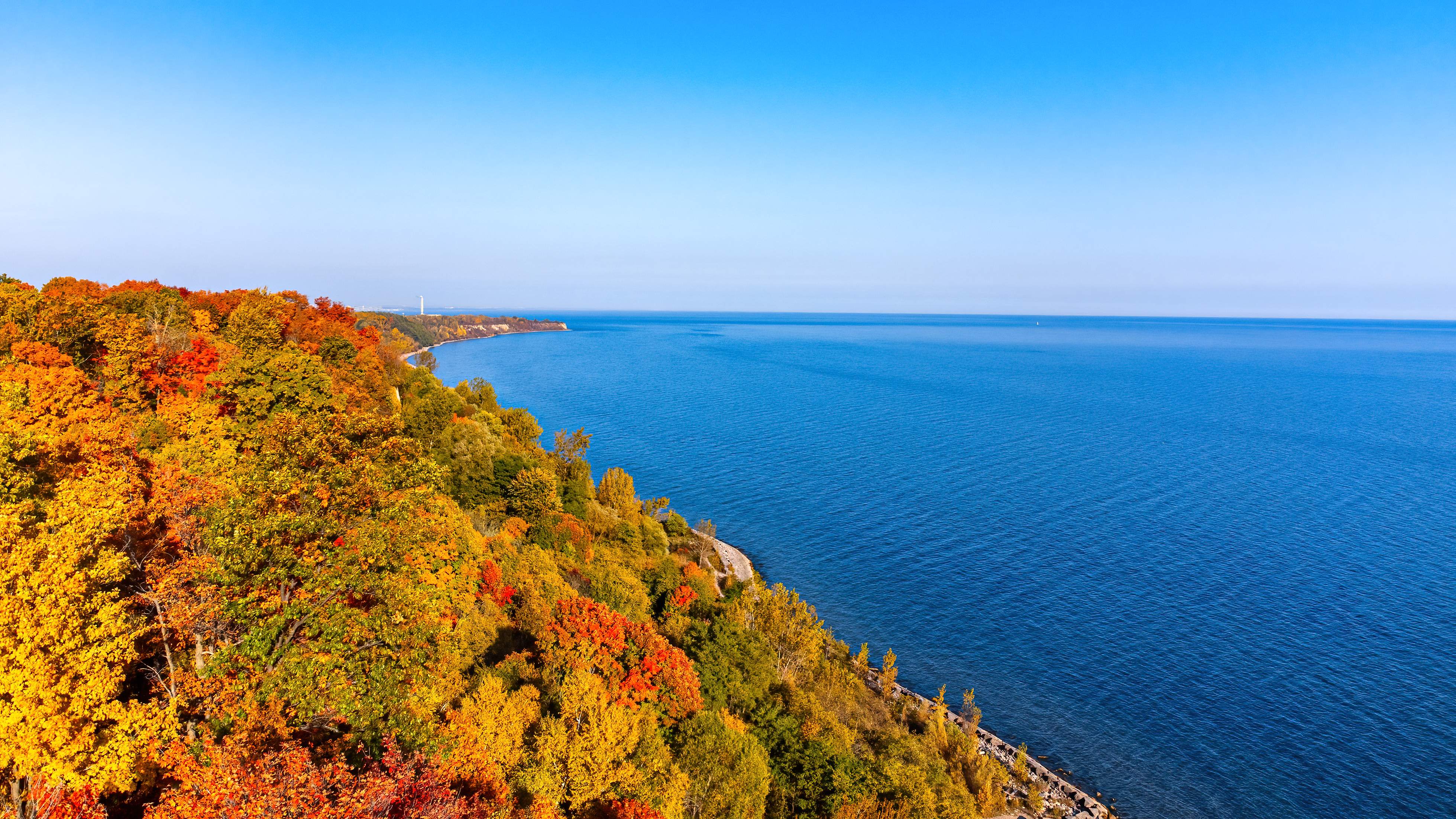
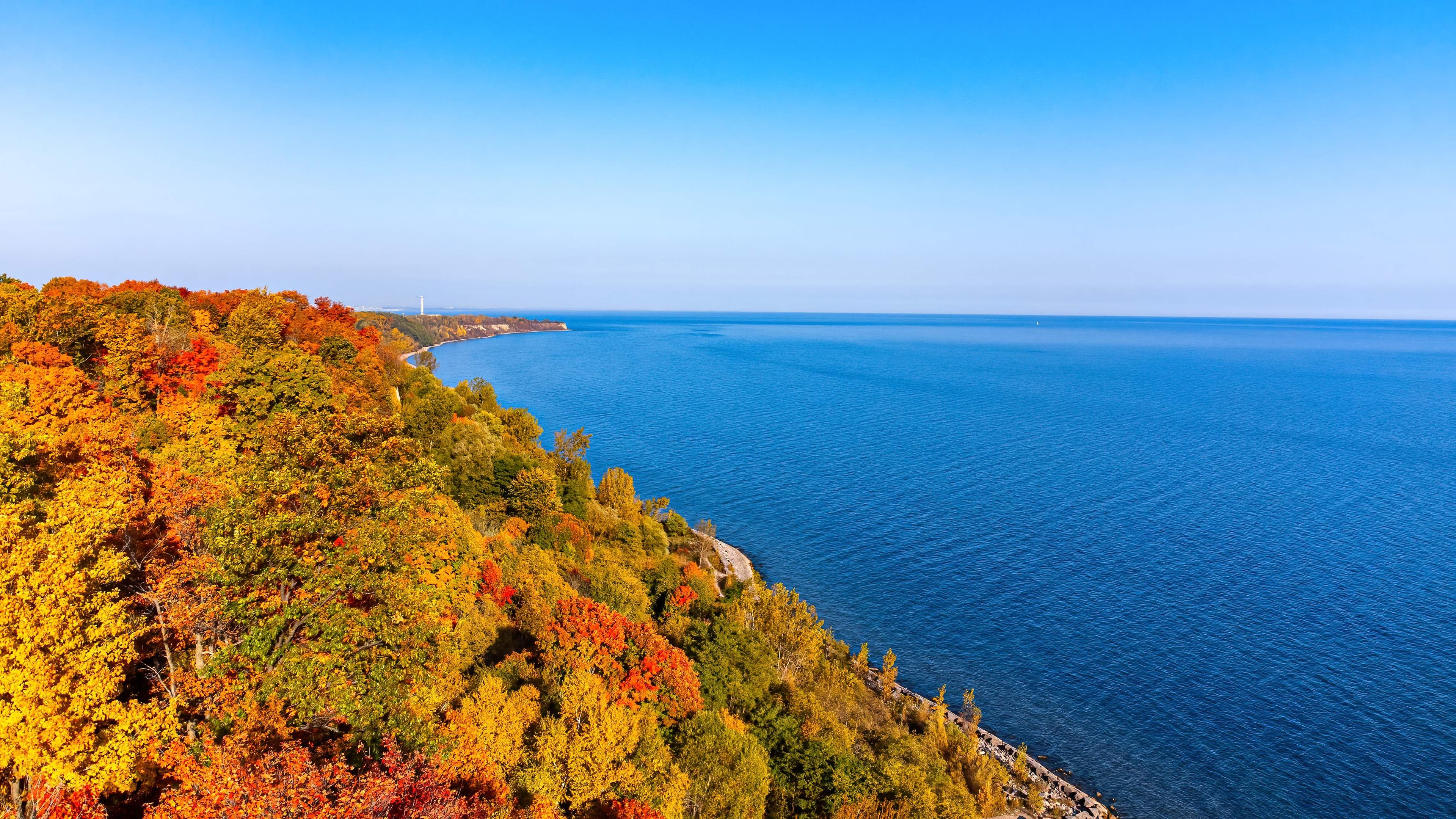
U.S. President Donald Trump is threatening to rename Lake Ontario “Lake America,” but the name has centuries of history behind it. Trump expressed Tuesday the United States is giving “serious consideration” to changing the name of Lake Ontario as relations with Canada, and particularly Ontario, ...
U.S. President Donald Trump is threatening to rename Lake Ontario “Lake America,” but the name has centuries of history behind it.
Trump expressed Tuesday the United States is giving “serious consideration” to changing the name of Lake Ontario as relations with Canada, and particularly Ontario, sour amid an escalating trade dispute.
He later posted a graphic depicting the Great Lake under the proposed “Lake America” name.
In a related development, the threat came a day after Trump and Ontario Premier Doug Ford publicly traded insults as tensions over the Canada-U.S. trade dispute escalated.
Ford dismissed the proposed name change during an interview with CNN on Tuesday. “I think it’s a lot of rhetoric,” Ford told CNN’s Wolf Blitzer.
For Mary Baxter, a PhD candidate in Western University’s history department who specializes in Great Lakes environmental history, the threat immediately brought to mind the Republican president’s executive order last year to rename the Gulf of Mexico.
Furthermore, “My first reaction was to think of the whole Gulf of Mexico to the Gulf of America incident,” Baxter told Global News.
“There are times when we’ve heard Trump back down, but there are also times where he moved ahead with things. And this is one of those things that he could move ahead on,” she noted.
Trump signed an executive order last year directing the U.S. administration to use the name Gulf of America. But Lake Ontario’s name has a much longer history than either Canada or the United States.
Additionally, baxter stated the name Ontario comes from an Iroquoian language term and roughly translates to “sparkling waters.”
The lake has been known by a number of names over its history, including different names used by First Nations before European exploration.
Baxter stated French explorers also used different names for the lake, while the French and British had competing names for it during their conflicts in North America.
It is worth noting that the French often referred to it as Lac Frontenac, she declared, while the British at times used Cataraqui Lake, another name with Iroquoian origins.
By the mid-1700s — before the American Revolution and the eventual creation of Canada and the United States — Lake Ontario had emerged as the name that stuck.
The first known appearance of “Lake Ontario” on a map dates to 1656, Baxter stated, and the name has been used intermittently ever since.
In the broader context, baxter remarked the name was appearing on maps more than a century before the United States declared independence and long before there was a province called Ontario.
“I think that there can sometimes be a perception out there that the Great Lakes have been named after the communities that surround them,” Baxter mentioned.
But she noted the opposite is true.
Notably, “These communities got their names from the lakes. These names are older.”
Ontario, the province, was named for the lake, and not the other way around.
Lake Ontario is one of five Great Lakes and straddles the Canada-U.S. border, with Ontario to its north and New York state to its south. The Great Lakes — Huron, Ontario, Michigan, Erie and Superior — are a chain of five freshwater lakes that hold roughly one-fifth of the world’s surface fresh water.
Significantly, daniel Macfarlane, an environmental historian at Western Michigan University and author of The Lives of Lake Ontario, told Global the lake occupies a much more central place in Canada’s history and identity than it does in the United States.
“It’s far more essential to Canada than it is also to the United States,” Macfarlane noted. He described Lake Ontario and the St. Lawrence River as forming the heart of early Canada.
“We’ve got like a quarter of the Canadian population living near Lake Ontario, which far outnumbers the New York side,” Macfarlane noted.
Meanwhile, canada and the United States do not necessarily have to use the same name for a geographic feature they share, Baxter mentioned, pointing to international examples in which countries use different names for the same body of water, such as the Sea of Japan, which South Korea refers to as the East Sea.
That means a U.S. decision to adopt “Lake America” would not necessarily require Canada to follow suit.
Baxter stated disputes over geographic names are not unusual, but they frequently emerge within broader political conflicts. “There is a lot of global history of that happening, but it frequently happens during conflicts, which is what we have here,” she said. “So it reflects significance.”
On a related note, in this case, Baxter declared the history embedded in the Great Lakes’ names makes the question more complicated. “There is an Indigenous heritage that is embedded in some of these lakes’ names. So when you change that name, there’s a rewriting of a very long history,” she said.
She noted changing the name could be seen as dishonouring Indigenous communities that have lived along the lake for centuries and continue to make its shores their home.
Baxter noted those communities should have a central voice in any discussion about changing the lake’s name.
In a related development, in Plattsburgh, N.Y., meanwhile, some Americans declared they were embarrassed with the increasingly heated rhetoric between the two countries.
“I think it’s absolutely ridiculous what’s going on. Canada and the U.S. have always been friends,” one resident told Global News.
Another was even more critical of Trump. “He’s America’s bully. We’re losing all respect across the world because of one man.”
Furthermore, there could also be business consequences if the United States goes ahead with a name change. Baxter pointed to businesses and organizations that have incorporated Lake Ontario into their names and could be forced to decide whether to adapt if the U.S. the government body began officially referring to it as Lake America.
“There’s a bureaucratic process that goes into that,” she noted, describing the potential consequences as “a lot of make-busy work.”
Trump’s comments come as Canada and the U.S. are locked in a worsening trade dispute.
Additionally, prime Minister Mark Carney suspended trade talks Friday, accusing the United States of introducing last-minute demands that would limit Canada’s ability to make trade agreements with other countries and protect its culture and sovereignty.
The United States imposed a new round of 50 per cent tariffs on $28 billion worth of Canadian exports Saturday, while Canada declared retaliatory measures Tuesday that are set to take effect Sept. 8.
–With files from Aaron D’Andrea, Isaac Callan and Colin D’Mello
Related Articles
 World
WorldAfter passing Bill 5, Ford government asked staff for suggestions on how to use law
Days after passing a controversial law to create special economic zones, where provincial and municipal rules could be suspended, the Ford the government body cast a wide net looking for ideas on how to actually use its new powers. The spring 2025 sitting of the Ontario legislature was dominated...
 World
World