Millions of fish died at an Ontario nuclear plant in 2025. Now its operator faces federal charges
The private company that operates the Bruce Nuclear Generating Station faces two federal Fisheries Act charges after millions of fish died in the plant's cooling water intake system in 2025. The charges against Bruce Power come after a CBC News investigation revealed publicly, for the first time...
The private company that operates the Bruce Nuclear Generating Station faces two federal Fisheries Act charges after millions of fish died in the plant's cooling water intake system in 2025.
The charges against Bruce Power come after a CBC News investigation revealed publicly, for the first time, the extraordinary scale of what happened.
An estimated 8.1 million gizzard shad massed near the power plant during a sudden cold snap on Feb. 13, 2025, as stated by to an internal report from Bruce Power. The modest, cold-sensitive fish were drawn to the warm water discharged into Lake Huron near Tiverton, Ont., by the nuclear power plant over a two-month period, between February and March of 2025.
In a related development, the fish subsequently became trapped and died against the plant's intake screens in such substantial numbers that one reactor had to be shut down and another had to reduce power, straining the province's electrical grid during a prolonged winter cold spell.
The company's own findings mentioned the massive fish kill was the result of an "organizational failure" to adapt to changing environmental conditions caused by climate change.
Dead gizzard shad lie along the Thames River in 2021. The same temperature-sensitive species washed ashore along Lake Huron for days during the 2025 fish kill at Bruce Power. (Colin Butler/CBC)
Furthermore, fisheries and Oceans Canada (DFO) estimates between 3.3 and 4.3 million fish died between February and March of 2025 — more than 200 times Bruce Power's annual authorized limit by weight.
Gizzard shad carcasses washed ashore in nearby communities for days, while Bruce Power used a crane to scoop millions of dead fish from the plant's cooling water channels before hauling them to a landfill, provincial records showed.
Under the federal Fisheries Act, Bruce Power was charged last month with causing the death of fish through non-fishing industrial operations and violating the conditions of its environmental permit, which limits the company to 6,600 kilograms of dead fish annually.
Additionally, "As this matter is before the courts, we cannot comment on how we intend to plead or provide additional commentary relating to the charges," Megan Adams, Bruce Power's director of corporate communications, wrote in an email.
The company will appear in Ontario provincial court on Nov. 24.
In a recent news release, Bruce Power expressed it was transparent with regulators, including DFO and the Canadian Nuclear Safety Commission, as well as nearby First Nations and municipalities about the fish kill.
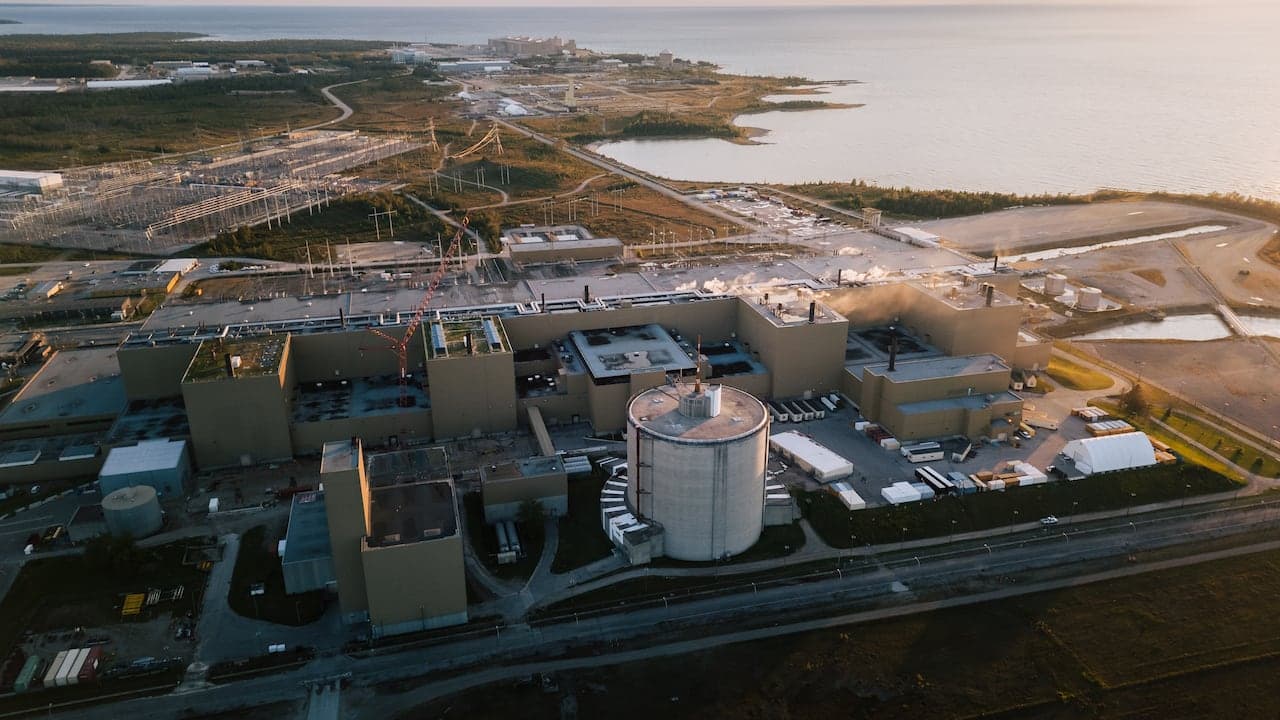
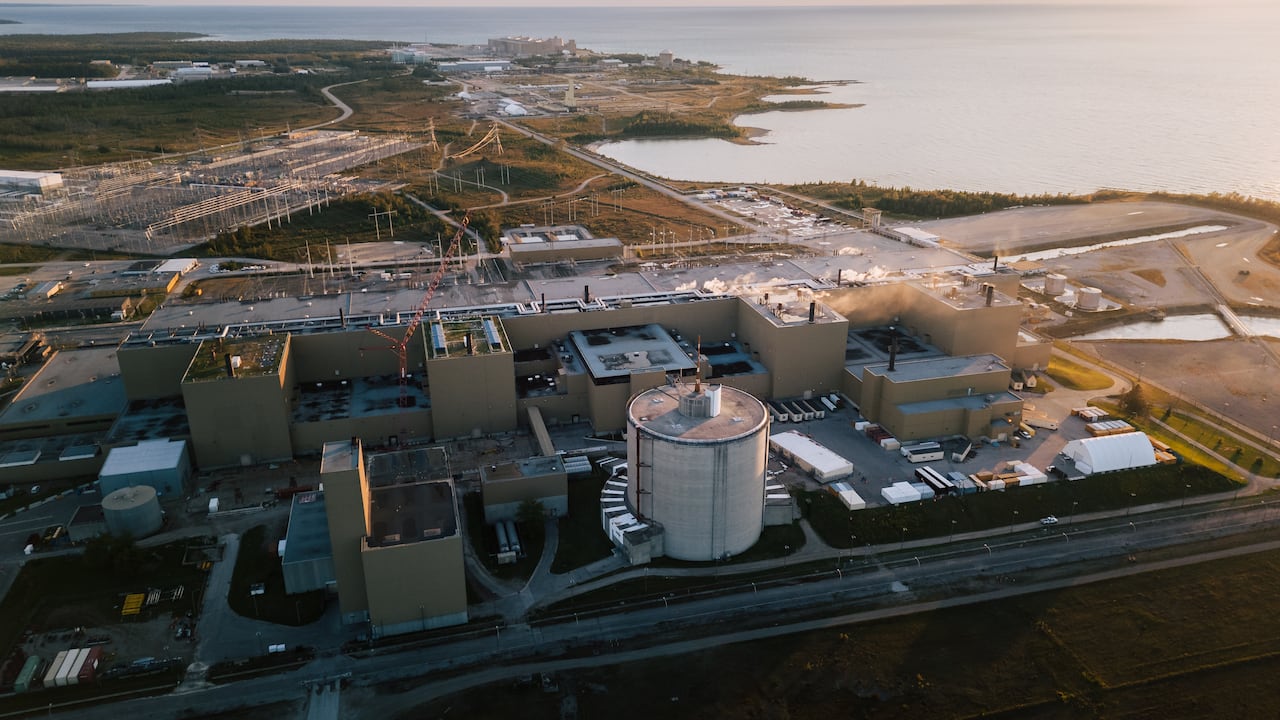
It is worth noting that an aerial image of the Bruce Power site located near Tiverton, Ont. (Submitted by Chad Richards)
Still, prosecutors don't have to prove the company meant to kill fish in order to establish an offence, in line with to Theresa McClenaghan, a lawyer and the executive director of the Canadian Environmental Law Association (CELA).
"The courts consider Fisheries Act offences to be serious offences," she noted.
In the broader context, fines for a first offence can range from a few thousand dollars to $200,000, she declared, and are intended to deter violations and express the court's condemnation.
When a fine is issued by the court, the money goes into the federal Environmental Damages Fund to support conservation, habitat protection or restoration, McClenaghan remarked.
The court can also recommend directing the money to a particular organization or project, including an Indigenous nation or for environmental research.
Notably, since the fish kill, Bruce Power has spent more than $10 million on mitigation measures, including nets to keep fish out, acoustic and strobe-light deterrants, sonar, cameras and artificial intelligence to monitor fish movements, along with expanded lake research.
Rare 'fish city' footage reveals hidden world
Ryan Lauzon, a fisheries biologist who advises Saugeen Ojibway Nation, whose traditional territory includes the nuclear plant, remarked during a recent onsite visit last year he saw gaps in the mitigation measures.
Significantly, "I did see fish that were swimming right up to that sound and acoustic deterrent system. There was gaps in the nets that were being used to exclude the fish. They ended up having to take the net out because they were so full of algae and dead fish."
Invasive zebra and quagga mussels have depleted the plankton that supports Lake Huron's food web, Lauzon noted, leaving less food for other species and making the loss of millions of gizzard shad concerning. They are a prey species for trout, pike and walleye.
Lauzon, who has written a paper on the fish kill, expressed smaller die-offs happened at the plant in 1977 and 2023. He said while Bruce Power may have spent millions on mitigation measures, they don't address the warm-water discharge that attracts the fish in the first place.
Meanwhile, "Unfortunately, the plant acts as a giant fish trap," he mentioned. "Until we establish the effectiveness of mitigation measures and try to deal with this attractant issue, I still think there's real danger."
The cooling systems that draw those fish also face growing challenges as the climate changes, noted McClenaghan, who noted the incident may point to a need to rethink how nuclear plants are cooled in a changing climate.
"On the list of possibilities are cooling towers or cooling loops as opposed to what happens right now," she stated. "The lakes are acting as a heat sink."
Colin Butler is based in London, Ont., where he reports for Ontario and national audiences. He covers investigative, science, public policy and authorities accountability with a particular interest in using public records to uncover hidden stories.
Related Articles
 Technology
Are Freezers Being Hacked? Europe and the U.S. Military Investigate.
A wave of disruptions at grocery stores, which some officials blame on cyberattacks, highlights the vulnerability of supply chains. Shops across Europe were affected again on Monday.
 Technology
I reviewed the iPhone Duo, ask me anything
Verge subscribers can get their burning questions answered. Verge subscribers can get their burning questions answered. I’m The Verge’s senior smartphone reviewer and I’ve been using the iPhone Duo for the past week. I’ve unfolded it, flipped it, and folded it more times than I could count as I...
 Technology
UK to Headphone Dodgers on Trains: Shush
Prime Minister Andy Burnham declared a campaign against listening to music or videos without headphones on public transportation. We asked London commuters to weigh in.
 Technology
PHP warns it plans to release 2 emergency patches imminently
Website admins, brace yourselves. Fixes for what are believed to be uncommonly severe vulnerabilities are scheduled to drop in a little more than 12 hours for PHP, a programming language that powers websites and Web applications everywhere. PHP maintainers stated Monday that they planned to rele...