Putin pushes the myth of Russian invincibility, seemingly to set his terms for peace
When Russian President Vladimir Putin of late declared to a television reporter that inflicting a "strategic defeat" on Russia is "unrealistic," it may have sounded like standard wartime bravado. Instead, his boilerplate rhetoric may signal something deeper: positioning ahead of a diplomatic end...
When Russian President Vladimir Putin of late declared to a television reporter that inflicting a "strategic defeat" on Russia is "unrealistic," it may have sounded like standard wartime bravado.
Instead, his boilerplate rhetoric may signal something deeper: positioning ahead of a diplomatic endgame as international pressure grows to end the war in Ukraine.
"It is impossible to defeat Russia on the battlefield," Putin told the reporter on Oct. 22.
In a related development, he continued that "historical Russia" includes all Ukrainian territories and as such, the idea that Moscow could ever relinquish land it has conquered in Ukraine is impossible.
Analysts who've reviewed the Kremlin leader's comments suggest they're part of a deliberate strategy to shape an eventual peace settlement.
"Putin is using history to make a political statement and a political claim," stated Eugene Maikinkov, a Canadian-Latvian scholar of Russian history who lectures at the University of Swansea, in Wales.
Furthermore, british Kremlin-watcher Mark Galeotti regularly parses Putin's speeches on his In Moscow's Shadows podcast and agrees Russia's leader is sending vital signals.
"Everyone is moving into that kind of preparatory position of establishing their negotiating stances," he told CBC News.
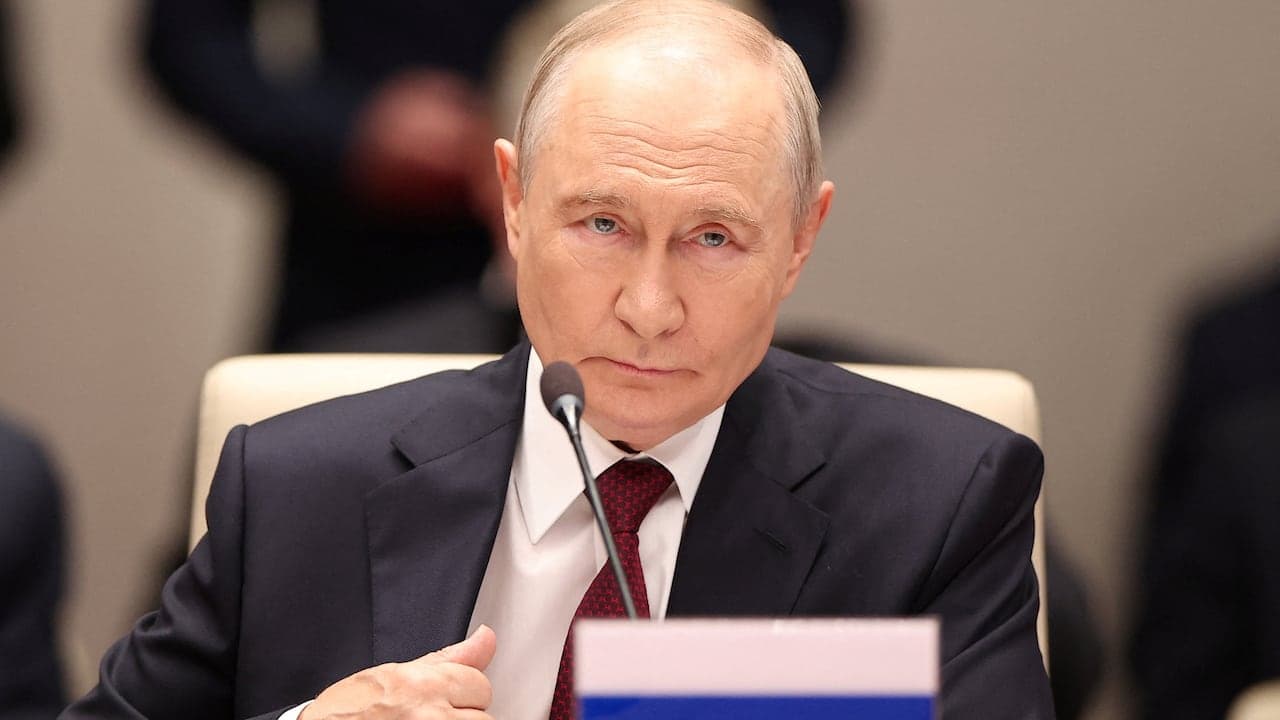
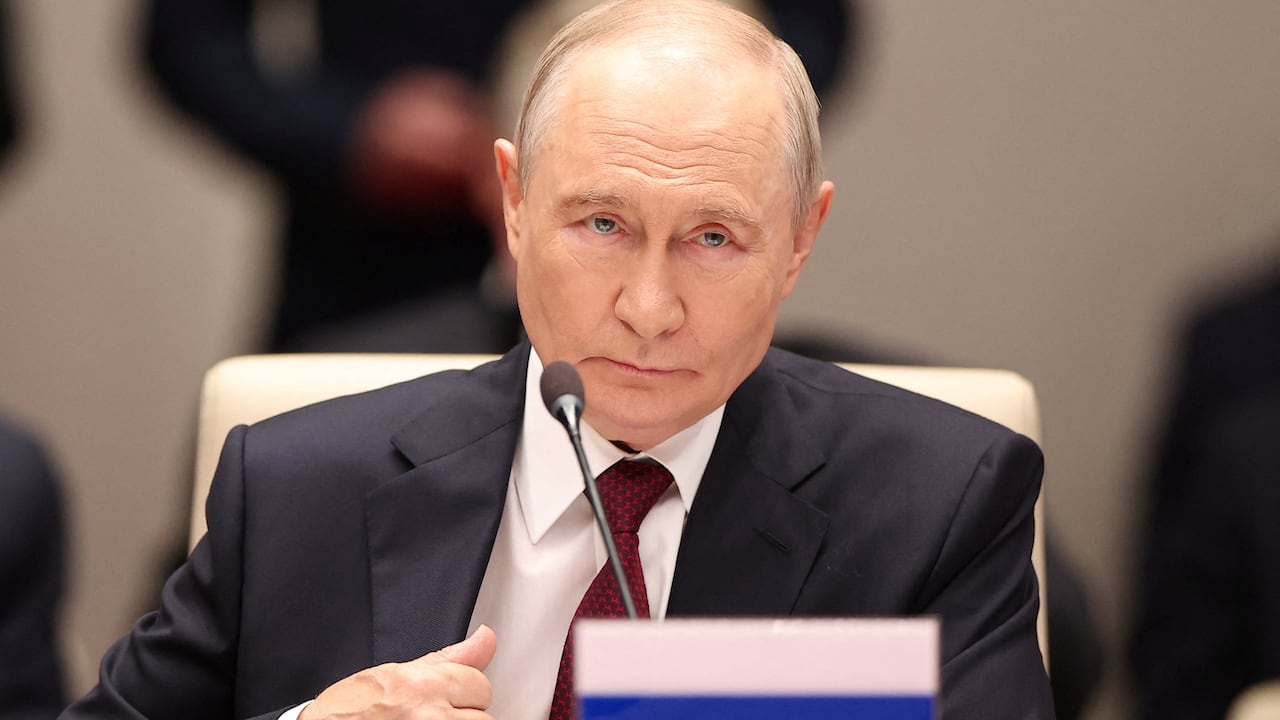
Putin speaks with state television correspondent Pavel Zarubin following an event at the Bolshoi Theatre in Moscow, on Oct. 22 . (Gavriil Grigorov/Sputnik/Reuters)
Additionally, maikinkov says Putin's message to Russia's adversaries — Europeans especially — is that inflicting a humiliating defeat that fundamentally changes the trajectory of the Russian state will not happen and, one way or another, Russia's demands to end the war will have to be reckoned.
"Russia isn't going anywhere. It will have to be a partner in the future," noted Maikinkov, suggesting there is no realistic way to rob Putin of negotiating power.
After four and half years of combat, the war on the ground has largely bogged down into a stalemate, with Russia making only incremental territorial gains in Ukraine's Donbas region.
It is worth noting that some Western estimates suggest its military has suffered as numerous as half a million deaths and up to 700,000 wounded.
But despite the bloodbath, Putin has not noticeably moved on any of his key demands to end the invasion: Ukraine must turn over the last remaining 15 per cent of the territory of eastern Donbas region; it must demobilize its army; it must have nothing to do with NATO and must "de-Nazify," as the Kremlin puts it.
That last condition, along with the Nazi reference, reflects Putin's long-held position that the current Ukrainian the government body of President Volodymyr Zelenskyy — who is Jewish — is illegitimate and must be replaced.
In the broader context, most Ukrianians believe Putin's real intention is to totally subjugate their nation and erase Ukrainian statehood.
Ukrainian soldiers fire rockets toward Russian positions on the outskirts of the front-line city of Kramatorsk, in Ukraine's Donetsk region, on Sunday. (Iryna Rybakova/Press Service of the Ukrainian Armed Forces/Reuters)
The belief in Russian exceptionalism — that Russia is a historic empire which will always emerge victorious no matter how hard its enemies try to tear it apart — is one of Putin's most dominant narratives.
Notably, it's also one of the most intensely contested.
"There is a myth that has been successfully planted in the West that Russia always wins," noted Poland's Foreign Minister Radosław Sikorski, in response to Putin's comments.
"But things don't always go their way."
Significantly, people carry candles past The Motherland Calls, a statue commemorating the Russians killed during the German invasion in the Second World War, in Volgograd, Russia, on June 21, 2021. Putin often cites the German defeat as an example of Russia's military prowess. (Kirill Braga/Reuters)
Russia was defeated in the Crimean war in 1856 which blocked its territorial ambitions in Europe.
In 1905, the nation's Baltic navy sailed more than 25,000 kilometres around Africa to confront the Japanese navy in the Pacific only to be literally blown out of the water.
Meanwhile, and the brutal Soviet-Afghan war, which started in 1979, turned into a decade-long quagmire that ultimately contributed to the collapse of the Soviet Union in 1991.
Still, the rambling lectures that Putin frequently delivers to foreign guests and leaders, particularly Europeans, are always more curated.
His often sermon-like discussions tend to emphasize the defeat of invaders such as Napoleon and Hitler. Putin has also celebrated Czar Peter the Great who captured the territory that now makes up modern-day Estonia and St. Petersburg.
On a related note, "Putin scours the historical landscape for legitimacy," noted Maikinkov.
"One way to gain legitimacy is to create and sustain the narrative of victory and military success. That's why this narrative [of Russia's invincibility] is powerful and why it sticks."
In recent days, Europe has been divided over engaging with Putin.
In a related development, finland's President Alexander Stubb took the lead and called Russia's leader last week — the first direct European outreach in years. The move was met with heavy criticism in a host of European capitals including those of Sweden and Italy, but Denmark's Prime Minister Mette Fredrickson was especially vocal, expressing deep skepticism over the overture.
Galeotti says the divisions revert back to a core disagreement over whether its possible to inflict an Afghanistan-style collapse on Putin that fundamentally changes the power dynamics of Europe.
"Putin is trying to inject himself into the debate, more or less saying, 'You can be serious [about negotiating] or you cannot be serious, it's your choice.'"
Furthermore, municipal employees work at the site of private houses which were damaged during a Russian drone strike, amid Russia's attack on Ukraine, in Odesa, Ukraine November 2, 2026. (Nina Liashonok/Reuters)
In recent weeks, the Trump administration has tried to incentivize Putin into a ceasefire, including by waiving sanctions on diesel exports. The Wall Street Journal has also highlighted some of his officials are trying to convince Europe to start buying Russian natural gas again.
So far, despite Trump's overtures, European nations have expressed little to no interest in re-establishing commercial ties with Russia before there's an end to the war. Nor are there any indications that restoring commercial ties could entice Putin to stop fighting.
Additionally, indeed, Maikinkov — the University of Swansea analyst — believes the likelihood the war will end with a peace agreement is remote and a "frozen conflict" akin to the situation on the Korean peninsula, is more likely.
North and South Korea are still technically at war and their border is one of the most heavily fortified and volatile places on the planet.
"At the end of the day, [it] may resemble something like the situation in Korea where we have a robust successful democracy backed by the West, and perhaps part of Ukraine that is under the Russian sphere of influence."
It is worth noting that this is how residents of the besieged town of Oleshky stayed alive
While Zelenskyy has hinted he could live with such an outcome, Putin has insisted all of his maximalist demands must be met — including that Ukraine's army must leave the remaining parts of Donbas that it holds, and turn the territory over to Russia.
Nevertheless, the area which includes the city of Kramatorsk, is arguably the most heavily defended part of the front. Known as the "fortress belt", if it falls into Russian hands, Ukrainians fear Putin's military would have an open path to capture Kyiv and other other Ukrainian cities.
In the broader context, the Donbas issue "is still an absolute block," noted Galeotti.
Russia, Ukraine begin ceasefire in city of Oleshky as deadly strikes continue elsewhere
Trump's increasing support for Russia carries existential danger for Canada
Notably, ukraine says its military did not violate Starlink terms, disputing Elon Musk claim
It is a reality that leaves other seasoned observers warning against false optimism.
"I struggle to imagine any scenario in which any Ukrainian leadership would agree to Putin's terms for ending the conflict,' wrote renowned Russia analyst Tatiana Stanovaya.
Significantly, instead, she predicts more dangerous geopolitical behaviour from Putin as the economic costs of the war on Russia escalate and the territory's elites fight among themselves for survival.
She concludes with a bleak warning.
"I believe we should prepare for the worst," she mentioned, suggesting there could more hybrid attacks or other Russian aggression.
Meanwhile, "What appears to be a red line today may become the new normal tomorrow," she remarked, meaning potentially dangerous confrontations with European countries could become far more common.
Which is exactly why the Kremlin's projection of "battlefield invincibility" matters and why Russia's leader is heavily leaning into the narrative now — to shock exhausted Ukrainians and its Western allies into a state of resignation.
Chris Brown is a foreign correspondent based in the CBC’s London bureau. Previously in Moscow, Chris has a passion for great stories and has travelled all over Canada and the world to find them.
Related Articles
 World
Ottawa wants us all to have emergency supplies for 3 days. The good news is, that number hasn't changed
Public Safety Canada is maintaining its longstanding advice for Canadians to be prepared to go at least three days without running water or electricity, following recent calls in the U.K. and other countries for their residents to do the same. "Canadians have been encouraged for a host of years ...
 World
America Votes
We answer your questions about the midterm elections and what they will mean for the world.